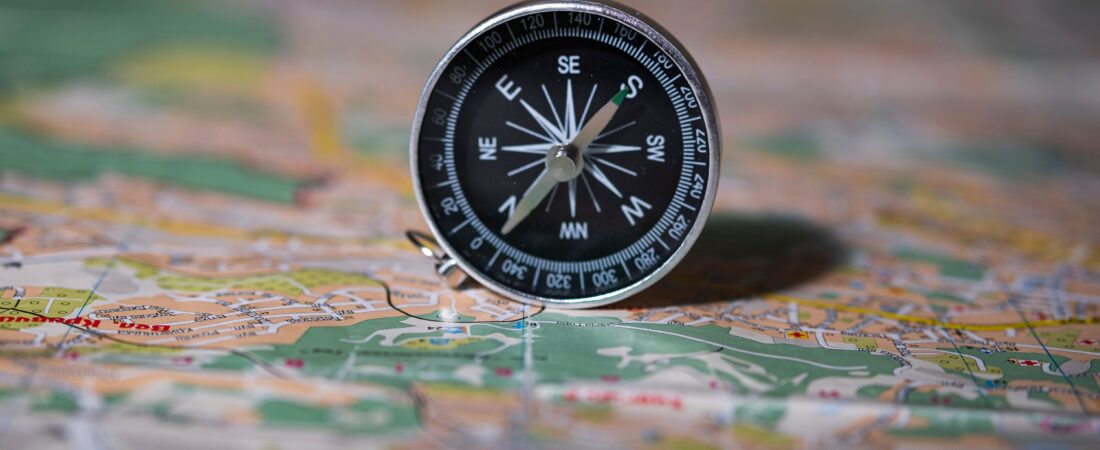
A compass becomes even more powerful when used with a map. Together, they help you know exactly where you are and where you need to go.
Step 1: Place the Map on a Flat Surface
Lay the map on the ground, a table, or another flat area. Make sure it is fully open and easy to read.
Step 2: Find the Map’s North
Most maps are drawn with north at the top. Look for the north arrow or compass symbol on the map. This tells you which direction the map is oriented.
Step 3: Align the Map with the Compass
Place your compass on top of the map. Hold both steady and slowly turn the map until the red end of the compass needle points toward the north symbol on the map.
Now the map matches the real world around you. Rivers, hills, roads, and trails should be in the same directions that they appear on the map.
Step 4: Locate Your Position
Find landmarks around you, such as a lake, river, mountain, or trail intersection. Compare them with the features shown on the map.
By matching these landmarks, you can estimate your current location.
Step 5: Choose Your Destination
Find the place you want to reach on the map. It could be a campsite, water source, shelter, or trail.
Place the edge of your compass so that one side connects your current location with your destination.
Step 6: Set Your Direction
Without moving the compass, rotate the bezel until its north lines match the north lines on the map.
The direction-of-travel arrow now points toward your destination.
Step 7: Follow the Bearing
Lift the compass and hold it flat in your hand. Turn your body until the red needle lines up with the north arrow inside the compass housing.
The direction-of-travel arrow now shows the direction you should walk.
Step 8: Navigate Using Landmarks
Instead of staring at the compass while walking, pick a tree, rock, or another visible object that lies in the direction of travel. Walk to that point and repeat the process.
This method helps you stay on course and move safely.
Keep Checking Your Position
Stop occasionally and compare your surroundings with the map. Confirm that rivers, hills, and trails are where you expect them to be.
Using a compass with a map takes practice, but it is one of the most reliable navigation skills you can learn. In the wilderness, this knowledge can help you avoid getting lost and find your way even when electronic devices fail.
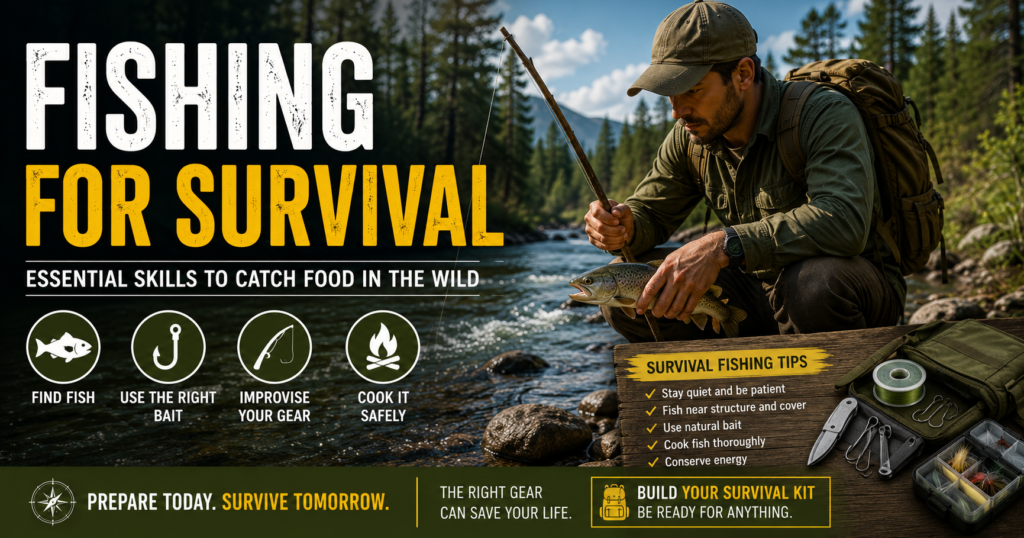
In a survival situation, fishing is one of the most effective ways to secure a steady food source. Compared to hunting, fishing usually requires less effort while providing high-quality protein
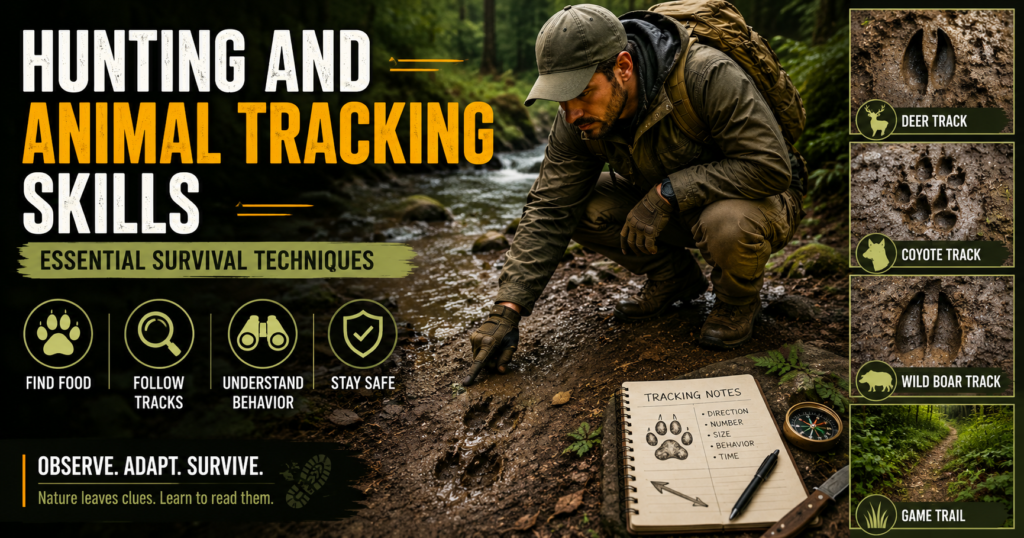
In a survival situation, knowing how to identify tracks and understand animal behavior can make all the difference. Hunting and animal tracking skills not only help you find food but
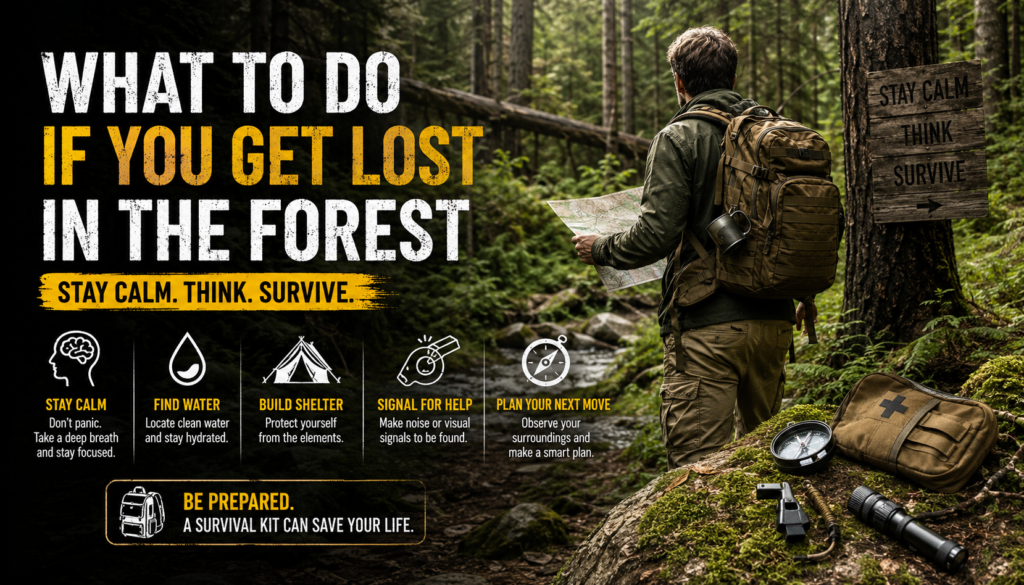
What to Do If You Get Lost in the Forest Getting lost in the forest can happen to anyone, from first-time hikers to experienced outdoor enthusiasts. The most important thing


